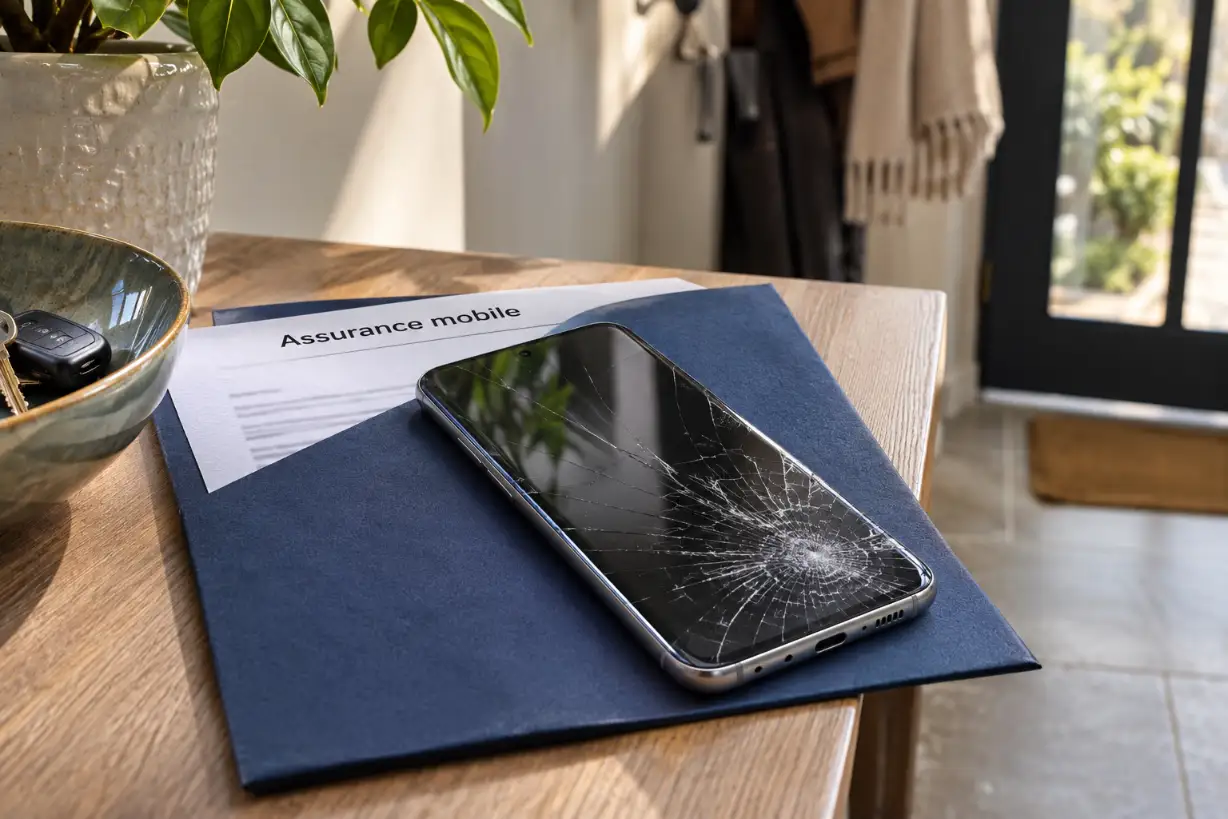
What a phone policy actually is
Mobile phone insurance is a contract that pays to repair or replace your handset when something covered goes wrong, such as a cracked screen, a drop in the bath, a theft or, if you add it, a loss. It is aimed at anyone in the UK who owns a phone worth more than they would happily pay to replace out of pocket. You may also hear it called gadget insurance, because many policies stretch to tablets and watches.
The idea is simple. You pay a premium, and when a claim is accepted the insurer either arranges a repair, sends a replacement or, in some cases, pays money towards a new handset. What the insurer owes you is set by the policy wording, not by the advert. Two policies with similar names can behave very differently once you read the small print on excess, limits and exclusions.
A policy is not a warranty. A warranty or a legal remedy deals with a phone that was faulty or defective. Insurance deals with events that happen to the phone after you own it. Keeping those two ideas apart saves you from paying for protection you already have and from expecting a payout for something the policy never promised.
Cover for accidents, liquid damage and breakdown
The most common reason people claim is accidental damage. A phone slips from a hand, a pocket or a table, and the screen or the back glass shatters. Policies that include accidental damage normally pay for the repair or a replacement, after you have met the excess. Liquid damage is usually treated as a separate heading, because water in a phone can cause trouble weeks after the event.
Breakdown cover is different again. It applies when the handset stops working because of an internal fault, but typically only once the manufacturer’s guarantee is over. While the guarantee runs, the maker is the first port of call. Read how a policy defines breakdown, as some insurers will not pay for a battery that has simply worn out with age.
Unauthorised calls
Some policies also pay for calls and data a thief runs up before the network blocks the line. This benefit usually comes with a cap, so tell your network promptly after a theft to limit the bill in the first place.
Cosmetic damage is rarely paid. A scratch or a small chip that does not stop the phone working is normally left out, and the same goes for general wear and tear. If you want a policy that fixes a scuffed frame, you will need to look for it specifically and check the wording line by line.
Theft and loss: read the definitions carefully
Theft cover sounds straightforward, yet the definitions matter more than anywhere else in a policy. Most insurers pay when a phone is taken by force or threat, or when someone breaks into a locked home or vehicle. A phone that simply goes missing from a table, or one left unattended in a bar, is the classic case that gets turned down.
Loss is a different heading again. Many standard policies do not include it, and where it is offered it is often an optional extra. If you are the sort of person who leaves things on trains, it is worth paying attention to this one, because a policy without loss cover will not help when the handset is simply gone.
After a theft you will generally need to report it to the police and to your network within whatever period the policy sets. The network can suspend the line and block the handset using its IMEI number, which makes the phone far less useful to the thief. Keep the crime reference number safe, because the insurer will ask for it.
Practical habits count as well. Policies commonly exclude a phone left in plain view in a parked car, and many treat a handset left alone for a moment as unattended. Treat those clauses as part of the price of the cover and plan around them.
What mobile phone insurance leaves out
Knowing the exclusions is as valuable as knowing the benefits. Policies commonly exclude damage that was there before you bought the cover, wear and tear, cosmetic marks, and any damage caused on purpose. Accessories such as cases, chargers and earphones are usually not paid for when they are lost or broken on their own.
Repairs carried out without the insurer’s agreement can also void a claim. If your phone breaks, ring the claims line before you take it to a high-street repairer, however convenient that feels. The insurer often wants to use its own repair network or to inspect the damage first.
Data is not covered. The photographs, messages and files on the phone are yours to protect through backups, and no policy puts them back. Likewise, modifications to the software or the hardware, or fitting non-original parts, can give an insurer grounds to refuse.
- Damage that existed before the policy started
- Wear and tear, a tired battery and cosmetic marks
- Phones left unattended or in plain view in a vehicle
- Loss, unless you added it as an option
- Repairs started without the insurer’s approval
What drives the cost of mobile phone insurance
The price of a policy rests on a handful of choices rather than a single rate. The value of the handset comes first, since a costly phone is more expensive to replace. The risks you include come next: accident only is a lighter product than a policy that adds theft and loss. Your chosen excess, the amount you pay on each claim, pulls the premium in the opposite direction.
How you pay also changes the picture. Monthly premiums, annual premiums and a single payment for a fixed term all exist, and introductory offers can make a plan look cheaper than it will be once the normal rate starts. Premiums include Insurance Premium Tax at the standard rate of 12%, so there is no hidden extra to find when you check the final quote.
Since premiums vary so much, the sensible test is to add up the total you would pay over the time you expect to keep the phone, then set that against the likely bill for a repair or replacement. For an older or cheaper handset, the sum may favour going without. For a recent flagship, the comparison often looks different.
Where you can buy a policy
Cover is sold through several routes, and each has its own strengths. Specialist insurers and providers sell stand-alone policies that are bought separately from the phone. Mobile networks such as EE, O2, Vodafone and Three offer protection alongside a contract, which is convenient because the claim and the phone sit with the same company.
Manufacturers have their own schemes. Apple sells AppleCare+, and in the UK the Theft and Loss option can be added for the iPhone. Samsung offers Samsung Care+. Retailers also sell plans at the till, but the risk is carried by an insurer behind them, so find out who that is before you sign.
Banks provide a further route. A packaged current account may include handset benefits for a monthly fee, and some require you to register the phone first. Home contents insurance can protect a phone, but only if personal possessions cover is added, since otherwise a phone taken out of the house may not be covered at all.
Whichever route you choose, compare like with like. Put the excess, the claims limit, the age of phone accepted and the proof you must provide side by side. A cheap monthly figure means little if the policy rejects the most likely type of claim.
Policies for popular brands and models
Insurers write policies for devices by value and by risk, so the model on your desk matters. Recent iPhones such as the iPhone 15, iPhone 16 and iPhone 17 are common choices, and the newer iPhone 17 Pro and iPhone Air sit in the same market. Apple has also announced the iPhone 18 Pro and iPhone 18 Pro Max, together with its first folding handset, the iPhone Duo.
On the Android side, the Galaxy S range from the S22 through to the S26 is widely insured, while Galaxy A phones cover the middle and lower end of the market. Google Pixel handsets and Xiaomi devices, including the Redmi and POCO ranges, are also eligible with many providers, although you should confirm a specific model is accepted.
Folding phones such as the Galaxy Z Fold and Galaxy Z Flip need extra attention. The flexible inner display and the hinge are the parts most exposed to damage and the dearest to put right, so check that the policy covers the foldable screen and what limit applies. Older handsets bring their own question, because many providers only accept devices that are new or recently bought.
A refurbished phone can usually be insured if it comes with a receipt from a retailer. Some plans accept it and others do not, so ask before you buy. A replacement handset sent after a claim may itself be refurbished, which is common across the industry.
Your protections as a policyholder, and scams to avoid
The Financial Conduct Authority regulates insurers and the firms that sell their products. Before you buy, search for the firm on the FCA Financial Services Register and use the contact details listed there. Clone firms copy the names of genuine companies, so a matching name alone proves nothing.
If you buy a policy at a distance, a 14-day cooling-off period lets you cancel. You must also take reasonable care to answer questions truthfully, a duty set out in the Consumer Insurance (Disclosure and Representations) Act 2012. An Insurance Product Information Document summarises the cover in plain language, and it is worth reading before you commit.
When a claim is refused or handled badly, complain to the firm first. It has 8 weeks to send a final response, after which you can take the case to the Financial Ombudsman Service, free of charge, within 6 months. If an authorised insurer fails, the Financial Services Compensation Scheme protects 90% of a valid general insurance claim.
Remember that a faulty phone is the retailer’s responsibility under the Consumer Rights Act 2015, which sits apart from any insurance you hold. Try that route first when the problem is a defect rather than an accident.
Scams to watch for
Fraudsters have learned that people worry about their phones. Typical tricks include unsolicited calls or texts offering to sell or renew phone insurance, and letters made to look like a genuine renewal. The aim is to get your card details or a payment before you realise there is no real policy.
A genuine provider will not insist that you hand over card numbers on a cold call. If someone rings you, end the call, then look up the firm on the FCA Register and contact it through the details shown there rather than the number the caller gave you. Treat pressure to decide immediately as a warning sign.
Check your bank statements regularly for payments you do not recognise. If a premium is leaving your account for a policy you never agreed to, contact your bank and the firm, and keep a note of dates and conversations in case you need to complain further.